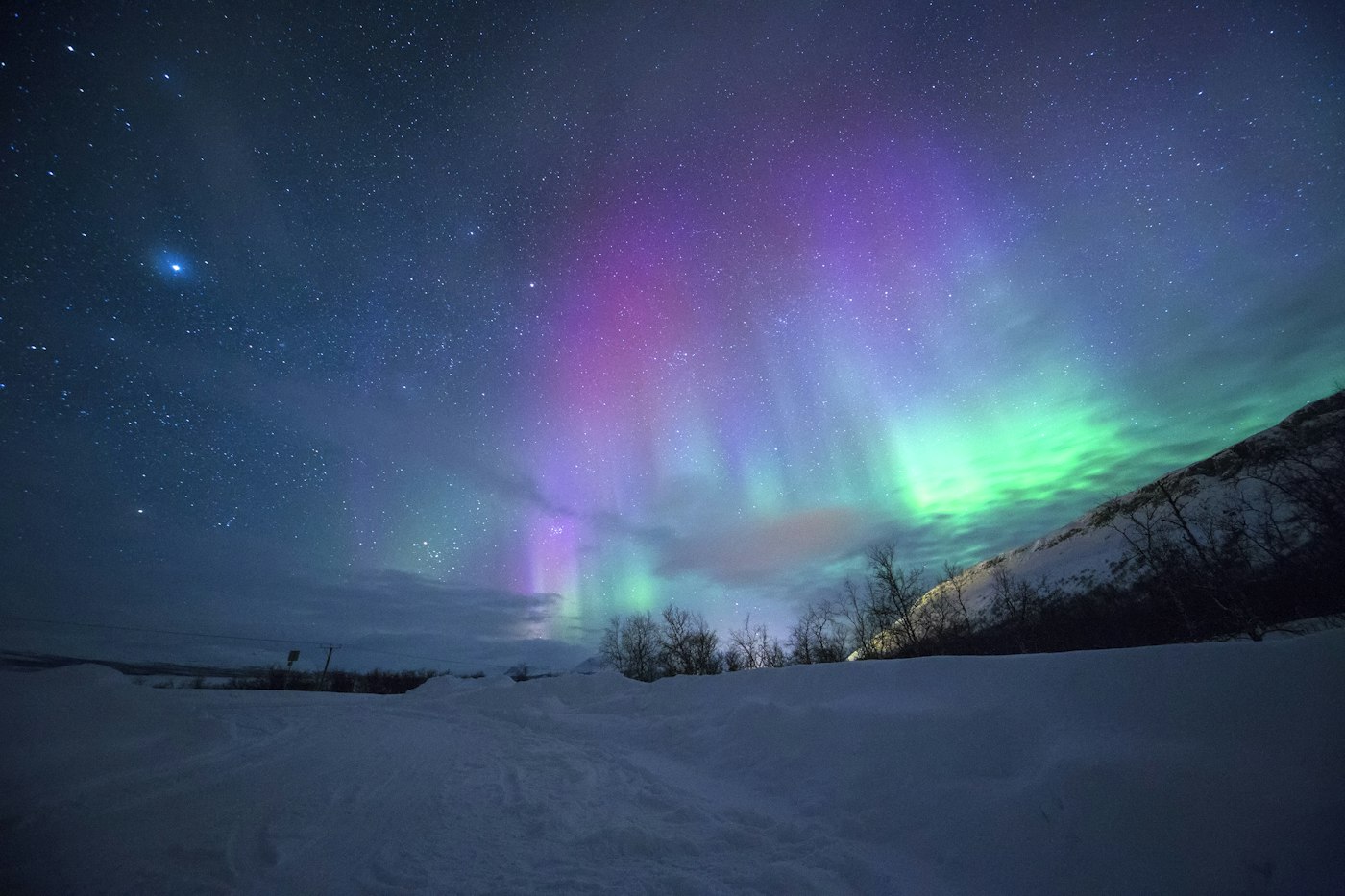

I spent 10 nights in Iceland specifically to chase the northern lights. I saw them on night 7. The waiting was the lesson. Here's everything I learned.
The Honest Truth About Aurora Hunting
The aurora borealis is a natural phenomenon entirely outside human control. You can optimize your chances dramatically — and still wait a week to see a significant display. Any tour or service that "guarantees" northern lights sightings is either lying or has very liberal definitions of what constitutes a sighting.
What you can control: being in Iceland during the right season, being in a location with minimal light pollution, checking the right forecasts, and being willing to drive at 11pm when the forecast looks promising. What you can't control: whether the sun produces a coronal mass ejection, whether the sky is cloudy.
When to Go
Aurora season runs from approximately September to March. The darkest months (November–February) give the most hours of darkness and therefore the most opportunities to see the lights. September–October and February–March offer the bonus of dramatic Iceland landscapes without the deep midwinter cold and isolation of January.
I went in October. The landscape was extraordinary — black sand beaches, waterfalls at full flow after summer rain, and up to 12 hours of darkness. I'd go again in the same month.
The Apps and Forecasts That Work
Space Weather Live
Tracks Kp index (auroral activity) in real time. Anything above Kp 3 is visible from Iceland. Kp 5+ is a significant storm. Set notifications for Kp 3+.
Veðurstofa (Icelandic Met Office)
Cloud cover forecasts for Iceland are notoriously unreliable more than 24 hours out. The local Met Office app updates frequently and shows cloud cover region by region — essential for knowing where to drive.
Light Pollution Map (lightpollutionmap.info)
Plan your dark-sky locations before you arrive. The Westfjords, east Iceland, and the Snæfellsnes Peninsula all offer exceptional dark skies. Reykjavík itself has too much light pollution for anything but a very strong display.
The Best Northern Lights Locations
Snæfellsnes Peninsula
Two hours north of Reykjavík, manageable as a night drive. The glacier at the tip of the peninsula, Snæfellsjökull, provides a dramatic foreground if the sky is clear. The black lava fields on the southern coast reflect the lights vividly.
Jökulsárlón Glacier Lagoon
The floating icebergs in the lagoon create a foreground that turns a northern lights photo into something extraordinary. Five hours from Reykjavík on the Ring Road — make it a two-night stop, not a day trip.
- Best SeasonSeptember–March
- Minimum Nights7+ for reasonable chance of seeing aurora
- Best AppSpace Weather Live (Kp index alerts)
- Kp Threshold for IcelandKp 2–3 on clear nights
- Average Daily Budget$150–250 (Iceland is expensive)
- Best Vehicle4WD rental — essential in winter
Night 7: What It Was Like
The Space Weather Live app sent an alert at 10:47pm. Kp 5. I drove 45 minutes east to a lake I'd scouted earlier, far from any town. By the time I arrived, the northern sky had come alive — green curtains moving like liquid across the sky, occasionally shifting to purple and white at the edges. It lasted two hours. I barely photographed it. Some things you just watch.